
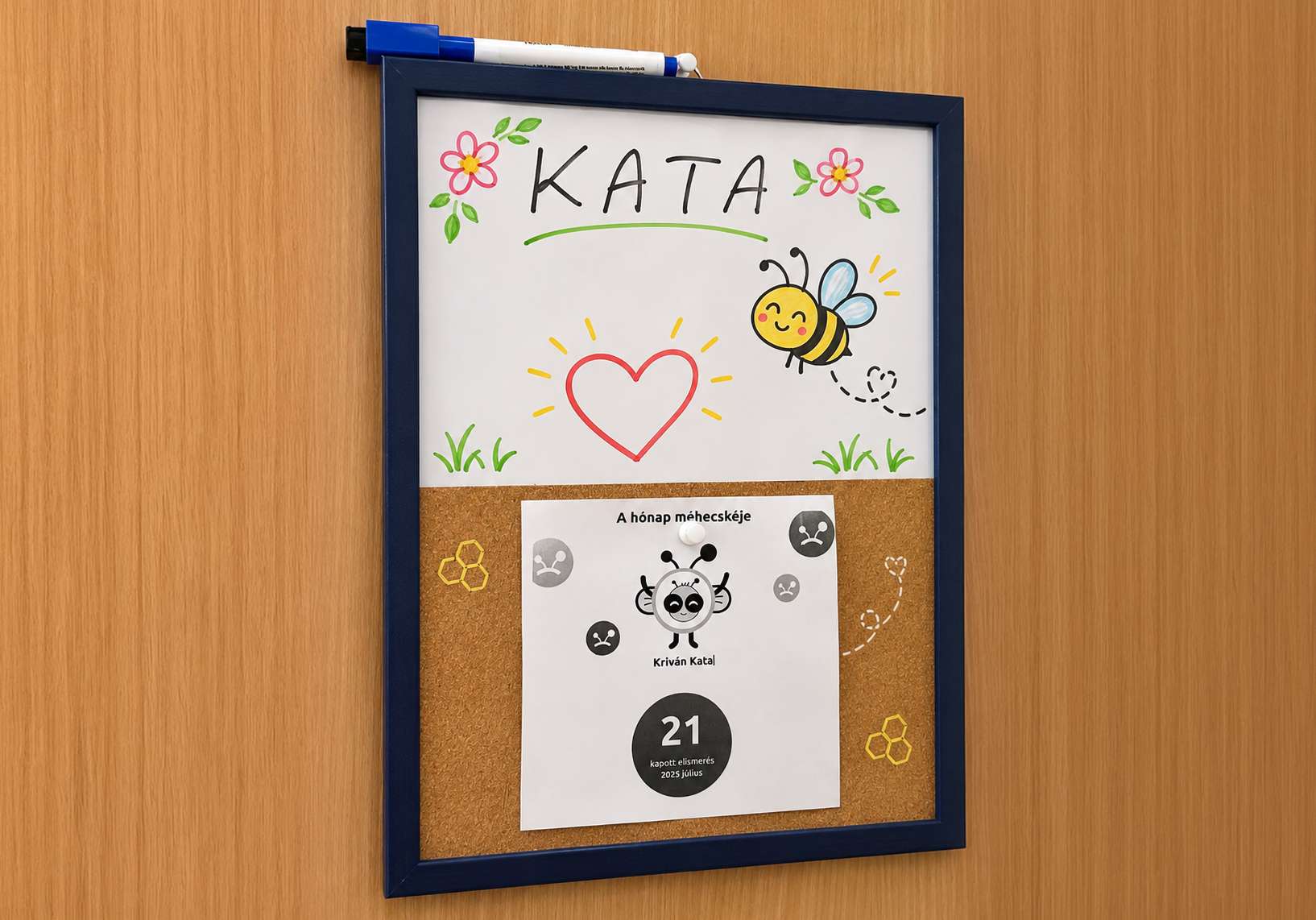
An accounting firm's insights on what makes a workplace appealing to young people.
A Gordius-Nosster, Ltd. Reaching out to employees and interns in their early twenties has long been a challenge for them. Eszter Tóth, Managing Director For a long time, he tried using the same arguments we see in most job postings: a stable job, competitive pay, a pleasant office, and various benefits.
But it's hard to stand out with these. Almost every company says the same things, so they don't really reveal what it will actually be like to work there.
Eszter also talked to her own children, who are in their twenties, about this. The gist of their response was simple: don’t just list more general benefits—show them how the team works in practice. For example, how they use Beeward.
This idea is consistent with the PwC Hungary's 2025 Labor Market Survey as well. Based on the responses of more than 9,700 college students, open, two-way communication, being treated as a partner, and regular feedback are of paramount importance to young people. Salary remains a key factor, but interpersonal relationships and day-to-day operations also play an important role in how they evaluate a workplace.
You don't have to choose just one person
The accounting firm had already elected the Employee of the Month. After a while, however, My colleagues were growing increasingly dissatisfied with this system. Not because they didn't want to acknowledge each other, but because they felt it was unfair, that they have to single out just one person from among many who have provided help and performed well.
At Beeward, you don't have to cast a single vote at the end of the month. Throughout the week, employees can recognize multiple colleagues, always for a specific action they’ve noticed. Maybe someone solved a difficult work-related problem, took on an urgent task, or simply checked in on a coworker who was having a rough day.
Thus, the "Bee of the Month" is not the result of a single popularity vote. It is determined by many smaller, specific pieces of feedback.
As a leader, Eszter observes that the team’s decisions typically align with her own experience:

„The ”Bee of the Month’ will always be the person who I feel really gave it their all that month.”
However, the system isn't just about the selected employee. The Others also receive regular feedback that their work has been noticed and appreciated. This can be especially important for someone just starting out who is still finding their place on the team.
A bonus isn't a favor from the boss
Employees can redeem their points for rewards. At the accounting firm, for example, one such option is the occasional early departure. This is not vacation time or an absence permitted by law, but rather a predetermined, redeemable company reward.
At first glance, the difference seems minor, but from a human perspective, the situation is quite different. The employee is not asking the manager for a personal favor that he or she might later have to return. Rather, the employee is taking advantage of an opportunity that was previously secured.
„He doesn’t feel like he’s getting a favor from his boss,
Eszter Tóth
”which you'll have to give back someday."
This gives colleagues more autonomy and clarifies the relationship between managers and employees. As a result, rewards do not depend solely on the manager’s individual decisions. The options and the conditions for receiving them are known to everyone.
The leader also sees more of the team
For Eszter, this recognition also provides leadership insights. It becomes clearer who people regularly turn to for help, who works well with others, and whose behind-the-scenes work the team values.
Of course, points are no substitute for personal attention. Between two people, a lack of recognition does not in itself indicate a conflict. However, it can be a good sign for a manager to ask what’s behind it.
One of the system's strengths is precisely that it highlights performance metrics that a manager might not otherwise be aware of.
Many such situations can arise in an accounting firm. Providing quick professional assistance, taking on a task, or supporting a colleague doesn’t always show up in performance metrics. Yet it can still make a significant contribution to the team’s functioning.
Employer branding doesn't start with a job posting
The lesson to be learned from the story of Gordius-Nosster Bt. is not that young people can be won over by a playful interface. A platform alone does not make a workplace attractive.
The key insight is that traditional employer promises no longer set a company apart. It’s important to talk about salary, the office, and benefits, but beyond that, you also need to showcase day-to-day operations: how people receive feedback, how much autonomy they have, whether they can have a say in shared matters, and whether they notice when someone truly contributes to the team’s work.
Anyone can write in a job posting that their workplace has a friendly atmosphere, supportive management, and that employees are valued.
It's much harder to prove all of this.
That’s exactly why Eszter’s story is so interesting. Rather than trying to make their workplace more attractive with yet more promises, they show how recognition, rewards, and employee engagement work at their company.
What Makes Employer Branding Authentic?
Authentic employer branding is not based solely on the promises made by the company, but on the actual experiences of its employees. Regular feedback, transparent rewards, and supportive workplace relationships are operational characteristics that a company can also highlight in its recruitment communications.
A strong employer brand isn't created by communication alone. Communication simply makes visible what is already working in the workplace.
How can we not only attract but also retain young employees?
A strong employer brand can help spark young people’s interest. However, long-term commitment requires more than that. What does Generation Z actually expect from a workplace, and what role do leaders, feedback, and workplace relationships play in this?
We wrote about this in a previous article:
Gen Z isn't looking for what you think they are. We'll show you what makes them loyal!